
TL;DR
Educational assistant collaboration is essential in modern classrooms. EAs work closely with teachers, therapists, and school specialists to support students with diverse learning needs. Strong communication, observation, and teamwork skills help ensure students receive consistent and effective support.
Student success in today’s classrooms rarely depends on one professional alone. Instead, it relies on educational assistant collaboration with a coordinated team that brings together teachers, specialists and others who each contribute different expertise.
Educational assistants are a vital part of that team. Through daily educational assistant collaboration with teachers and specialists, they help translate instructional plans into practical classroom support. Their observations, communication, and consistency often provide the bridge between strategy and student progress.
Understanding the educational assistant role on the school team helps explain why collaboration is one of the most important professional skills in the field.
What Is the Educational Assistant’s Role on a School Support Team?
The educational assistant role on the school team focuses on providing direct support to students while reinforcing the instructional goals set by teachers and specialists.
EAs often work one-on-one or with small groups of students who need additional support with learning, behaviour, or communication. Their work may include assisting students during lessons, supporting classroom routines, and helping students remain engaged with their learning plans.
While teachers are responsible for curriculum delivery and assessment, educational assistants help implement those plans in real time. This partnership allows teachers to manage the entire classroom while ensuring students who need extra assistance receive focused support.
Many students exploring educational assistant training first gain insight into these responsibilities by learning about a day in the life of an educational assistant.
How Do Educational Assistants Collaborate With Teachers Day to Day?
Teacher and educational assistant teamwork happens continuously throughout the school day. Communication before, during, and after lessons helps ensure everyone understands the student’s goals and progress.
At the start of the day, teachers may review lesson plans, behaviour strategies, or accommodations with the EA. During class activities, the EA supports students by reinforcing instructions, adapting materials when needed, and observing how students respond to learning tasks.
These observations are valuable. Educational assistants often notice subtle changes in engagement, behaviour, or comprehension that help teachers adjust their approach.
Consistent communication helps the classroom run smoothly. It also strengthens educational assistant collaboration by ensuring everyone is working toward the same objectives.

Teacher and educational assistant teamwork strengthens classroom support strategies
Which Specialists Do Educational Assistants Commonly Work With?
In addition to teachers, EAs frequently collaborate with specialists who support student learning and development. These professionals may include speech-language pathologists, occupational therapists, physiotherapists, behavioural specialists, and school psychologists. Each specialist contributes expertise related to a student’s unique needs.
Educational assistants often help reinforce the strategies these specialists recommend. For example, an EA may support speech practice activities suggested by a speech therapist or assist with motor skill exercises designed by an occupational therapist.
Through effective collaboration skills for educational assistants, these specialized strategies become part of everyday classroom routines. Students interested in developing these collaborative skills often explore practical learning through an educational assistant course.
These collaborative approaches reflect the continuum of supports and services in Alberta schools, where educators and specialists work together to help students access consistent, student-centred support.
What Information Should Educational Assistants Share With Teachers and Specialists?
Educational assistants are often the professionals who spend the most direct time observing a student throughout the school day. Because of this, their observations are valuable to the entire support team.
Important information EAs may share includes changes in behaviour, academic engagement, communication patterns, emotional responses, or progress with learning strategies. These insights help teachers and specialists evaluate whether current supports are effective.
Clear documentation and respectful communication are essential. Information should remain objective and focused on observable behaviours rather than interpretation.
When educational assistant collaboration functions well, these observations contribute directly to stronger student support plans.

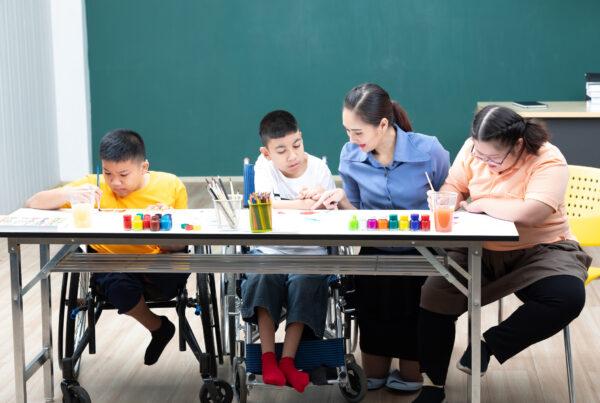
Educational assistants often work with therapists and specialists to support student success
How Can Educational Assistants Communicate Concerns About a Student Professionally?
Addressing concerns about a student requires professionalism and clarity. Educational assistants typically communicate observations to the classroom teacher first, who then coordinates discussions with specialists or administrators when needed.
Professional communication focuses on facts rather than assumptions. Instead of interpreting behaviour, EAs describe what they observed, when it occurred, and how the student responded.
This approach maintains trust and ensures that any adjustments to learning strategies are based on accurate information.
Reach that moment when your observations and communication contribute meaningfully to a student’s progress, and you recognize how important your role is within the broader school team.
Why Educational Assistant Collaboration Matters
In Alberta classrooms, collaborative student support systems are a standard part of inclusive education, bringing together educators and specialists to respond to diverse student needs. Educational assistant collaboration is more than simply helping in the classroom. It involves participating in a coordinated support system that prioritizes student growth.
Strong collaboration skills help EAs build trust with teachers, support specialists effectively, and contribute valuable insights that improve learning strategies.
For individuals considering a career in education support, learning these skills early can make a meaningful difference. Those exploring how to become an educational assistant often find that teamwork and communication are just as important as technical classroom skills.
Are you ready to shape the minds of future generations?
Your career awaits!
Key Takeaways
- Educational assistant collaboration is essential for effective student support
- EAs work closely with teachers, therapists, and specialists
- Clear communication strengthens teacher and educational assistant teamwork
- Observations from EAs help guide student support strategies
- Collaboration skills are a core competency in educational assistant roles
FAQ
What is the educational assistant’s role on a school support team?
Educational assistants provide direct classroom support to students while helping teachers implement learning strategies and accommodations.
How do educational assistants collaborate with teachers day to day?
They communicate about lesson plans, support students during activities, observe student progress, and share feedback with teachers.
Which specialists do educational assistants commonly work with?
Educational assistants often collaborate with speech therapists, occupational therapists, behavioural specialists, and school psychologists.
What information should educational assistants share with teachers and specialists?
EAs typically share observations about student engagement, behaviour, progress, and responses to learning strategies.
How can educational assistants communicate concerns about a student professionally?
They should communicate observations clearly and objectively, focusing on facts rather than assumptions.