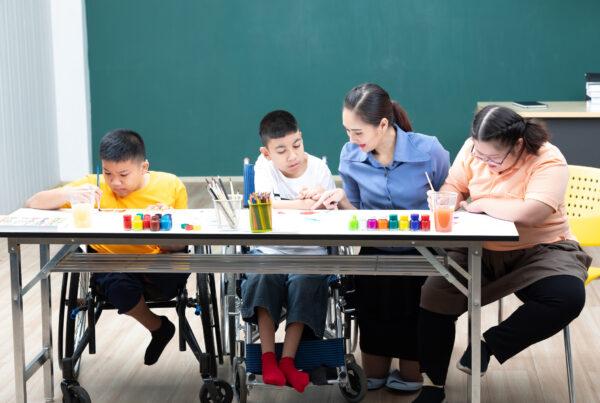



Building trust with students starts with how Educational Assistants communicate in everyday moments.
TL;DR
Educational Assistants build trust through consistency, respectful communication, and calm boundaries. Strong relationships help students feel safe, reduce behaviour challenges, and create better learning outcomes—especially for students who struggle with regulation, transitions, or confidence.
Trust isn’t a “soft” part of education. It’s the foundation that everything else sits on. When students feel safe with the adults around them, they’re more willing to try, more able to regulate emotions, and far less likely to act out when learning feels hard.
That’s why relationship-building is one of the most important skills Educational Assistants develop. This article breaks down practical relationship-building tips for educational assistant students, including how to communicate with students who resist help, how to stay consistent across different classrooms, and how to build rapport without crossing boundaries.
Why is trust so important for learning and classroom behaviour?
Because learning requires vulnerability, students have to take risks, make mistakes, and try again, often in front of peers. If a student doesn’t feel emotionally safe, their brain is more focused on self-protection than participation.
From what we’ve seen in real classrooms, trust also reduces behaviour escalations. Many challenging behaviours are actually communication: frustration, fear, shame, or overwhelm. When a student trusts an Educational Assistant, they are more likely to accept redirection, use coping strategies, and re-engage after a difficult moment.
Research and classroom-based education organizations like Edutopia consistently highlight the role relationships play in student engagement and academic success.
How can educational assistants build rapport without overstepping boundaries?
The key is being warm without becoming personal.
Students benefit when Educational Assistants are:
- Kind and approachable
- Predictable and fair
- Calm under pressure
- Respectful of privacy
- Professional with personal information
Rapport isn’t built through “being the fun adult.” It’s built through reliability. When a student learns that you will show up the same way every day, steady, respectful, and safe, they begin to relax.
This is also where boundaries matter. Consistency and boundaries in schools protect the student and the EA. You can care deeply while still keeping relationships appropriate and role-based.
What are practical ways to communicate with students who shut down or resist help?
Start by reducing pressure.
When students shut down, they are often overwhelmed. The goal is not to force compliance; it’s to create enough safety for the student to re-engage.
Practical classroom communication strategies include:
- Speaking quietly and slowly (not louder)
- Using fewer words and simpler directions
- Offering two choices instead of open-ended questions
- Giving the student time to respond
- Acknowledging feelings without debating behaviour
- Moving beside the student rather than standing over them
One approach we’ve seen work well is “connection before correction.” If a student feels seen, they’re more likely to accept support.
For students who resist help, neutral phrasing matters. Instead of “You need to do this,” an EA might say:
“Let’s do the first step together.”
Or:
“I’ll stay close if you need help.”
Small shifts like these can prevent power struggles and support student dignity.

Consistency and boundaries in schools help students feel safe, supported, and understood.
How do Educational Assistants support student behaviour positively?
Supporting student behaviour positively doesn’t mean ignoring problems. It means responding in ways that build long-term skill, not short-term fear.
Educational Assistants often support student behaviour positively by:
- Reinforcing effort and small wins
- Using predictable routines
- Giving clear expectations before transitions
- Supporting emotional regulation strategies
- Modelling respectful communication under stress
This is also where teamwork matters. In Alberta, inclusive education emphasizes supporting students in ways that promote belonging, safety, and participation in learning environments.
When EAs use positive strategies consistently, students don’t just behave “better”; they often feel better.
How can educational assistants stay consistent across different classrooms and teachers?
This is one of the hardest parts of the role, especially for new EAs.
Even within the same school, different teachers may have different expectations, routines, and classroom management styles. The most effective Educational Assistants adapt while staying grounded in professional principles.
Strategies that help include:
- Asking teachers for expectations at the start of the day
- Keeping a small notebook for routines and reminders
- Using consistent language with students when possible
- Aligning with the teacher in front of students (even when adjusting later)
- Focusing on student safety, dignity, and learning first
Consistency isn’t about doing everything the same everywhere. It’s about being stable, calm, and respectful, no matter which room you’re in.

Supporting student behaviour positively helps students stay engaged and confident in learning.
How educational assistant training helps you build these relationship skills
Relationship-building isn’t something you’re expected to “just know.” It’s a skill you develop through practice, reflection, and guidance.
Through educational assistant training, students learn how classroom behaviour, communication, and support strategies connect.
An educational assistant course, as the one offered at AOLCC Alberta, can also help you build practical tools for communication, boundaries, and student support in real classroom situations.
And if you’re ready to take the next step toward this career path, you can explore how to become an educational assistant here.
Because when you do this work well, you reach that moment when a student who once resisted help finally trusts you enough to try.
Ready to inspire the next generation?
Your career awaits!
Key Takeaways
- Trust is foundational to learning, emotional regulation, and classroom behaviour.
- Relationship-building tips for educational assistant students start with consistency, not charisma.
- Strong boundaries help Educational Assistants build rapport without overstepping their role.
- Classroom communication strategies should reduce pressure for students who shut down.
- Supporting student behaviour positively builds long-term confidence and skill—not fear.
FAQ: Relationship Skills for Educational Assistants
Q: Why is trust so important for learning and classroom behaviour?
A: Because students learn best when they feel emotionally safe. Trust reduces shutdown, anxiety, and behaviour escalations.
Q: How can educational assistants build rapport without overstepping boundaries?
A: By being warm, consistent, and respectful while keeping relationships professional and role-based.
Q: What are practical ways to communicate with students who shut down or resist help?
A: Use calm tone, fewer words, simple choices, and connection-first strategies that reduce pressure and protect dignity.
Q: How can educational assistants stay consistent across different classrooms and teachers?
A: By adapting to routines while staying grounded in professional principles like safety, respect, and predictable communication